

How to Detect AI-Generated Photos in Insurance Claims
A convincing claim photo can now be created or altered in seconds. Insurers need a layered integrity process that preserves the original evidence, tests it from several directions, and turns the findings into an explainable decision.
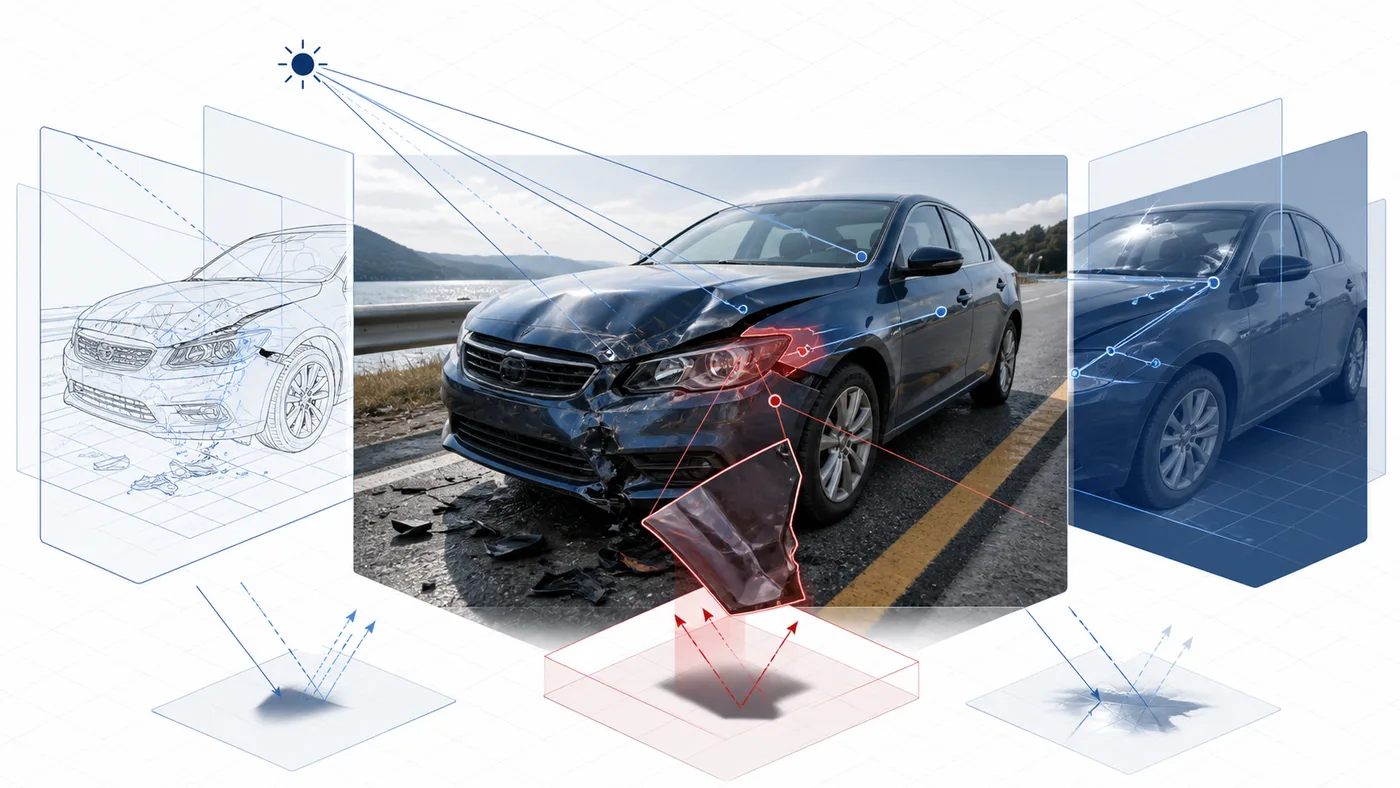
Consider a routine-looking claim photo: a dented vehicle, plausible reflections, and nothing that gives an adjuster an obvious reason to question what appears on screen. The image may be entirely synthetic, or it may be mostly real with one consequential detail changed.
Today’s image-generation tools can deepen hail marks, move a water line, replace a date, or insert damage from another vehicle while leaving the rest of a photograph intact. That selective edit can be especially difficult to spot because nearly everything in the frame is real.
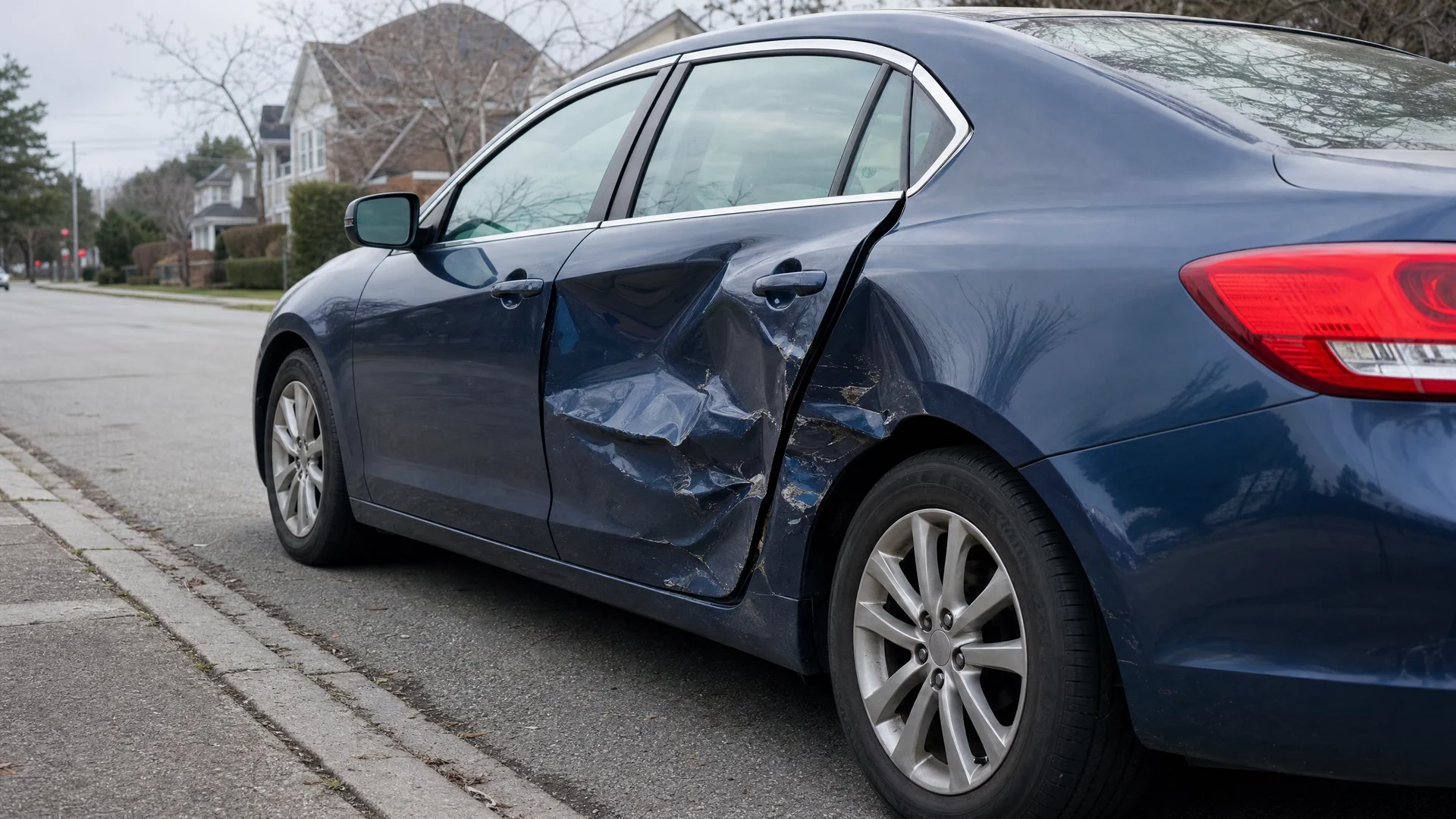
Claim photos become harder to trust when software can alter what they appear to document. A photograph can still provide valuable evidence, but appearance alone can no longer establish authenticity. Insurers need to preserve the submitted file, examine it through independent forensic methods, and compare the findings with the facts of the loss.
A reliable review process follows five steps: preserve, test, compare, route, and revalidate.
Preserve the evidence first
Evidence handling begins when the file arrives. By then, the image may already have been altered or stripped of useful information. Routine handling can resize an image, strip metadata, or convert it into a format that removes useful traces, and a screenshot can sever the remaining connection to the submitted original before any analysis occurs.
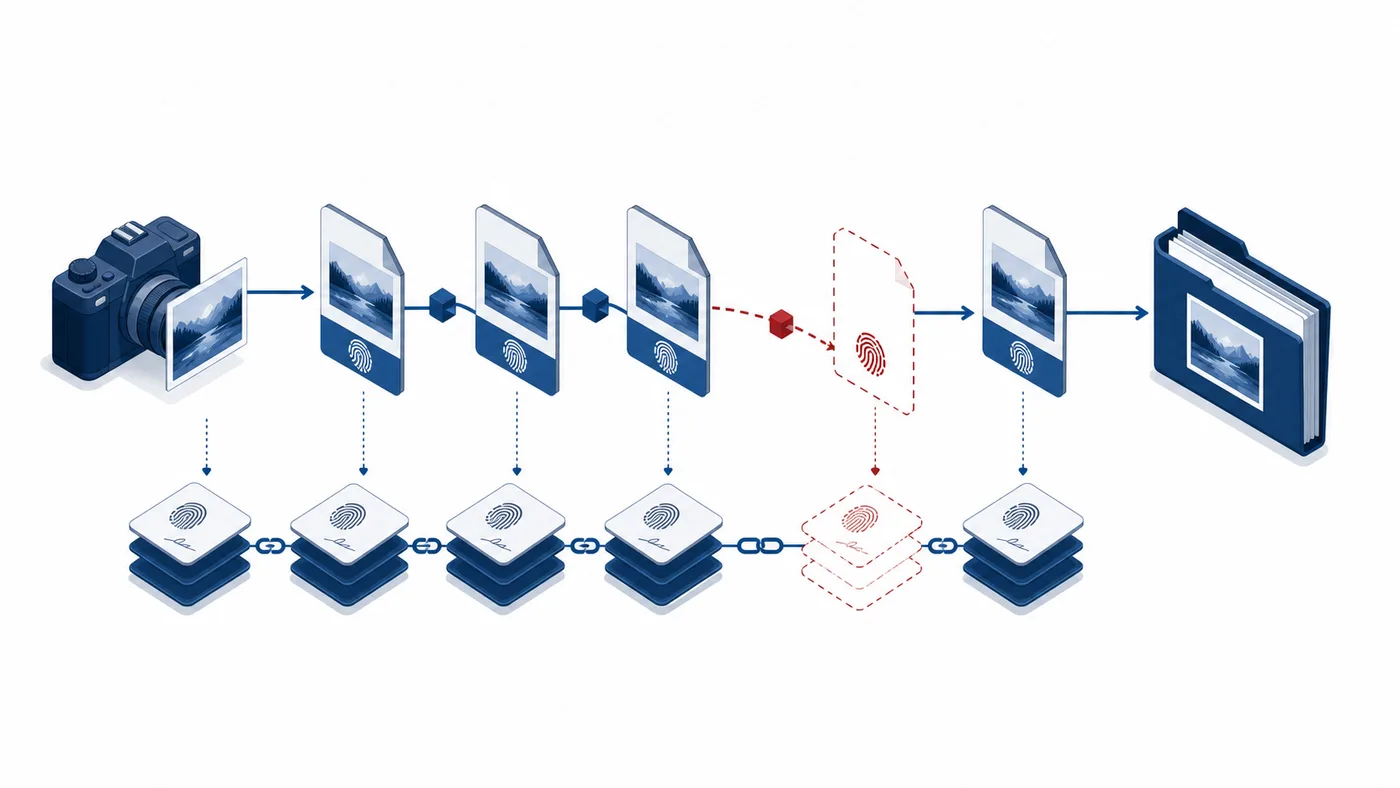
The insurer should preserve the original file and create a clear audit record. A cryptographic hash can distinguish the submitted evidence from viewing copies and annotated versions. The record should also capture when the file arrived, how it was submitted, and any metadata available at intake.
The same standard should apply across intake channels. An image submitted through an API and one uploaded by an investigator through a web interface should produce equivalent evidence records. Otherwise, the reliability of the analysis depends on how the claimant happened to send the file.
Once the original is protected, the carrier can examine the vehicle photograph without weakening the evidence it may later need to explain.
Follow the manipulation, not a single score
An AI-image detector can estimate whether software generated part of a file. The claims question is broader: does this photograph provide trustworthy evidence for this loss?
No individual test can answer that reliably. Research published at CVPR found that detectors trained on one family of generated images can fail on outputs from newer models. Normal compression can resemble manipulation, while screenshots can erase file history. A whole-image score may also miss a small altered region surrounded by authentic pixels.
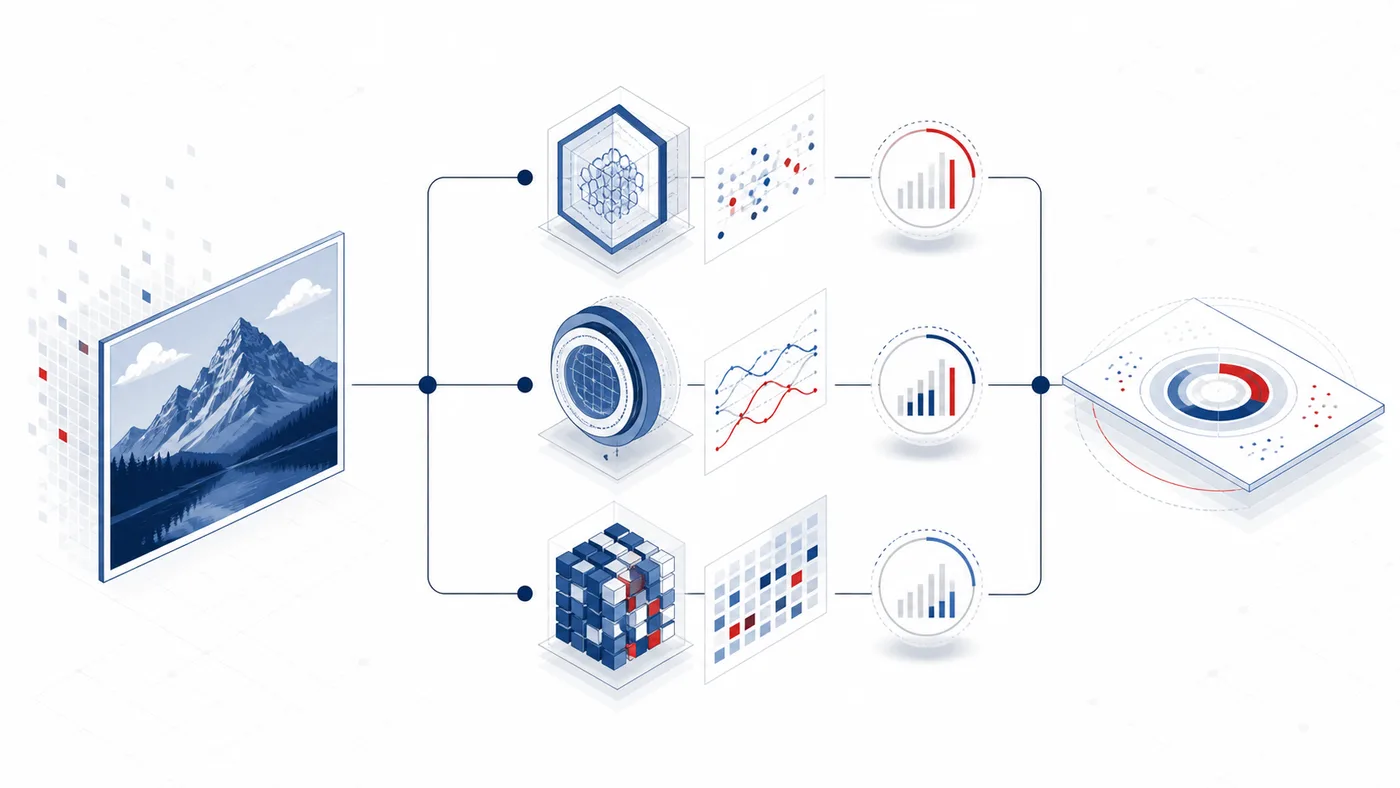
The strongest review combines several methods and preserves both agreement and disagreement between them. In the vehicle example, each method examines a different part of the same story.
Look for an earlier version
Reverse-image matching searches for prior appearances of the full scene or a region within it. The vehicle might match a marketplace listing posted months before the reported loss. A region-level search could also find the damaged door in an unrelated photograph, even if it was cropped, resized, or recompressed before being inserted into the claim image.
A match does more than raise a generic warning. It gives the investigator a source to compare with the submitted file and a timeline to test against the loss.
Test the suspected regions
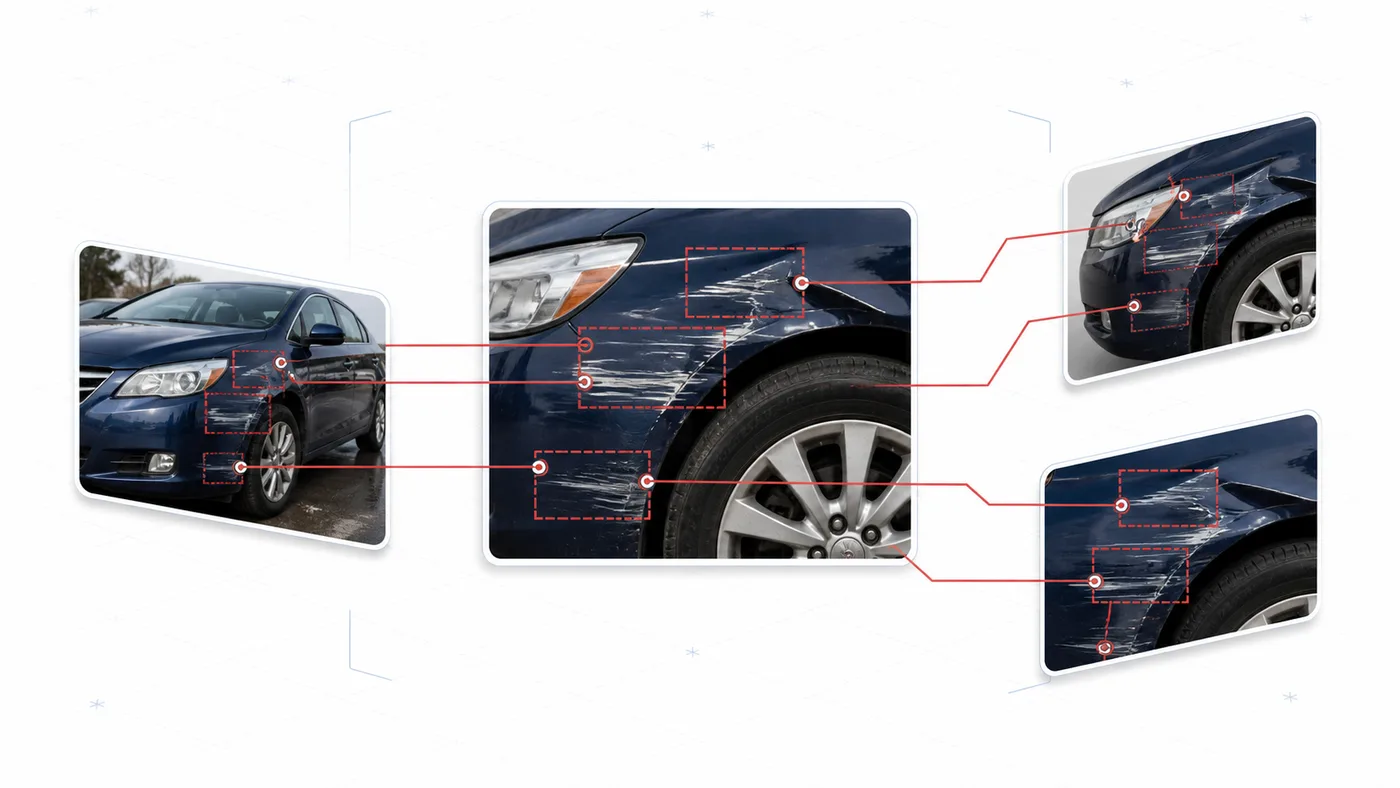
Synthetic-media analysis can examine the entire image and smaller areas within it. Several detectors may identify generation patterns around the damaged panel while the rest of the photograph retains a normal camera-noise profile.
Agreement across detectors strengthens the finding. Disagreement should remain visible because it can show that the signal is weak, localized, or sensitive to the method being used. A reviewer needs that uncertainty, especially when the result could affect how the claim is handled.
Check whether the scene holds together
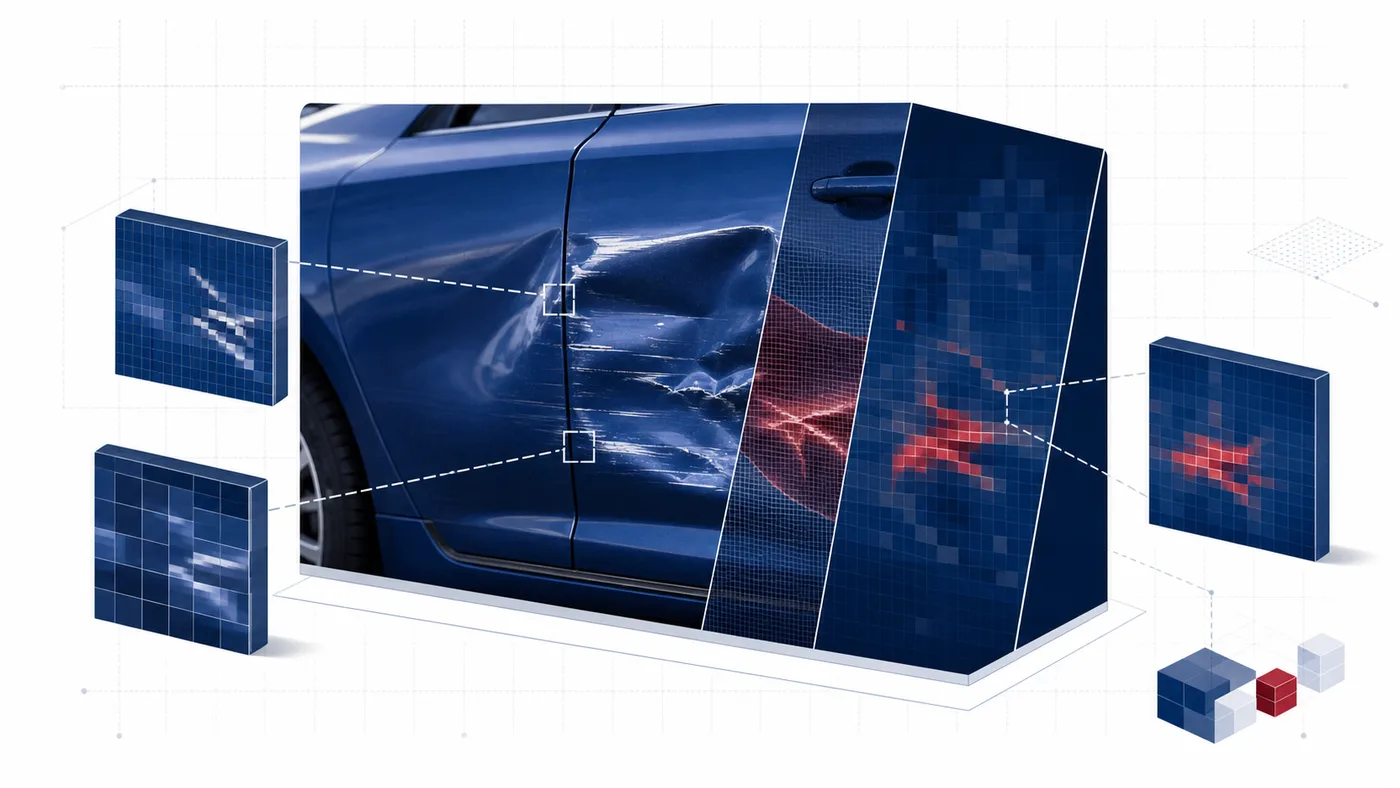
Pixel forensics looks for breaks in the image's internal continuity. Noise or compression may shift abruptly around an altered panel, repeated damage may leave a copy-move trace, and reflections may conflict with the scene's lighting. NIST’s Media Forensics Challenge evaluates manipulation detection, localization, splice detection, and provenance as distinct forensic tasks.
Localizing those findings along the edge of the vehicle damage gives the investigator somewhere specific to look. A heatmap or marked region is more useful than a manipulation score with no visible basis.
Compare the file history with the loss
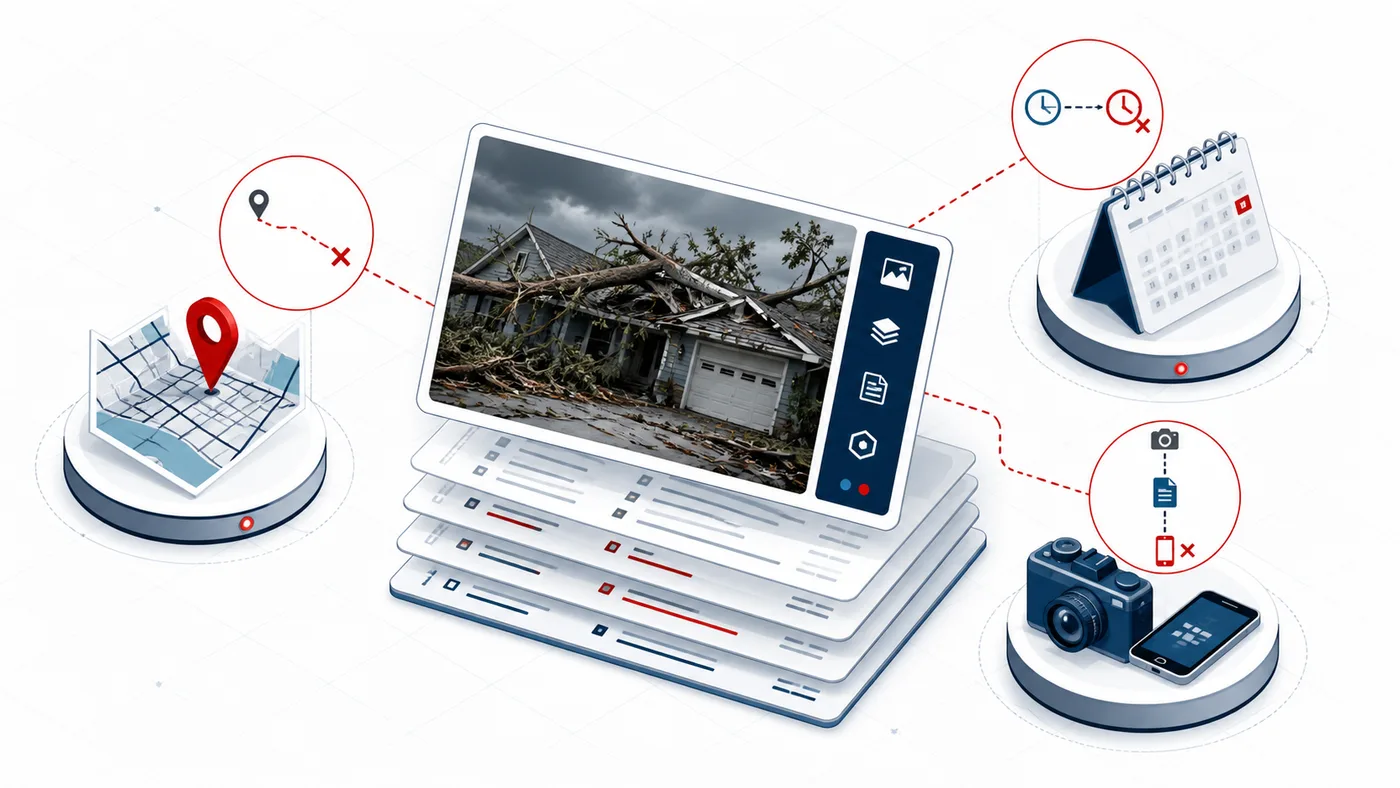
Metadata can connect the file to a time, place, device, or editing history. A timestamp from three weeks before the reported incident would materially change the meaning of the photograph. A capture location hundreds of miles away could create another direct conflict. Evidence that the file passed through editing software may justify closer review, though editing software alone does not establish deception.
Missing metadata deserves less weight. Messaging applications and claims platforms often remove it during normal handling. An empty field is common; a recorded fact that conflicts with the claim is far more useful.
Reconcile the image with the claim
Forensic findings identify unusual features within the file. Provenance and claim context determine what those features mean.
Content Credentials based on the C2PA standard can record where an image originated and how it changed by binding signed provenance information to the asset. The specification treats these records as trust signals rather than a judgment that the content is true. A valid credential can strengthen confidence in the file's history, while an absent credential carries limited meaning because adoption remains uneven and routine workflows may separate credentials from the asset.
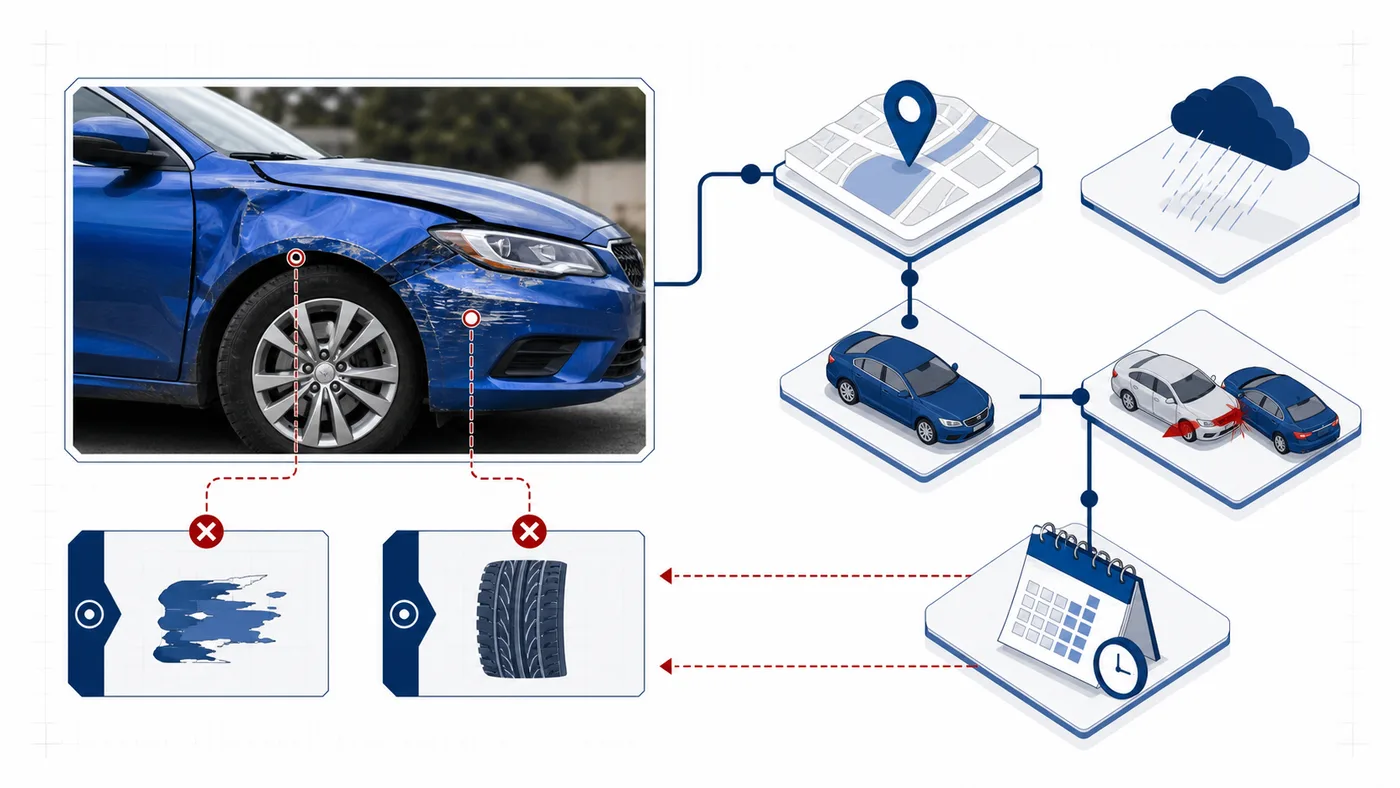
The loss facts provide the next test. A technically coherent photograph may still show the wrong vehicle, predate the incident, or depict damage that conflicts with the reported impact. The investigator should be able to compare the file history, visible scene, and claim record in one review path.
In the vehicle example, a prior marketplace match, localized generation signals, inconsistent reflections, and a pre-loss timestamp would reinforce one another. A single weak detector result would support a more cautious response.
Route the file with a reason
The output of the integrity process should tell the claims team what deserves attention and why. A risk level can help route the file, but the reviewer also needs access to the suspicious region, the supporting findings, and any uncertainty in the analysis.
A photograph with no meaningful conflicts can continue through the normal workflow. Ambiguous results may require the original file or another view of the damage, while several corroborating findings may support referral to SIU.
Routing thresholds belong to the claims operation. Exposure, line of business, and the timing of a payment can change the significance of the same technical finding. The model or detector guides attention; the adjuster or investigator makes the claim decision from the available evidence.
This separation keeps an unexplained score from becoming an adverse action and gives the carrier a rationale it can examine later.
Keep the control current
Before evidence screening enters a live workflow, carriers should test it on the kinds of files their teams actually receive. Clean and suspicious examples should pass through the real intake channels so the evaluation captures resizing, compression, and metadata loss introduced by those systems.
Accuracy is only part of the evaluation. False positives consume investigative time, and an accurate alert still has limited value if the reviewer cannot understand what triggered it. Test sets should include small edits and authentic images that have undergone benign processing because those cases reveal whether a promising detector will hold up in claims operations.
Performance will also change after deployment. Claims and SIU leaders should monitor false positives, review outcomes by line of business, and document why routing thresholds change. NIST’s Generative AI Profile calls for ongoing measurement and evaluation of generative AI risks. Periodic validation should include new manipulation techniques so performance does not degrade unnoticed in production.
Treat authenticity as a claims decision
Claim photos remain useful because they can connect a reported loss to visible evidence. Generative editing means insurers must establish that connection instead of assuming it.
Carpe Vision applies this layered approach at claim scale, running forensic engines in parallel and reconciling image findings with claim context.
A defensible process preserves the original, examines the file from several directions, and reconciles the findings with the facts of the loss. Technology can expose inconsistencies and organize the evidence. The final decision remains with the adjuster or investigator who can explain why the photograph was cleared, questioned, or referred.
Carpe
Related Resources

What Is Insurance Claims Fraud Detection? A Practical Guide for 2026
Learn how insurers detect claims fraud, where traditional approaches lose time, and how AI supports faster, explainable review.
Why AI fraud tools could cause claim risks
Carpe VP of Product Tom Rasmussen explains why black-box fraud scores create operational and legal risk when claims teams need defensible evidence.

What to Consider When Evaluating Claims Intelligence Technology
A practical framework for claims leaders evaluating coverage, evidence quality, adoption, integration, implementation, and production economics.
See Carpe on Your Own Book
A short conversation and a tailored walkthrough of the Carpe solutions that match your line of business.
Talk to An Expert