


What Is Insurance Claims Fraud Detection? A Practical Guide for 2026
Learn how insurers detect claims fraud, where traditional approaches lose time, and how AI supports faster, explainable review.
Insurance claims fraud detection is the process carriers use to identify false, exaggerated, or misrepresented claims. The strongest programs combine experienced claims professionals with data and technology that surface relevant signals early.
The goal is better claim decisions. A useful fraud detection system helps adjusters focus their attention, document their reasoning, and move legitimate claims forward efficiently. A signal can justify review. The final decision belongs with a qualified claims professional who can evaluate the full context.
What counts as insurance claims fraud?
Insurance fraud involves intentionally misleading an insurer or claimant to secure an improper financial benefit. An error, an incomplete record, or a single inconsistency does not establish fraud on its own.
The Coalition Against Insurance Fraud estimates that fraud costs U.S. consumers at least $308.6 billion each year and appears in about 10% of property and casualty losses (Coalition Against Insurance Fraud). Those estimates describe the scale of the problem. They do not turn every unusual claim into a fraudulent one.
Claims fraud generally falls into two categories.
Hard fraud starts with a deliberately fabricated or induced event. A person might arrange a collision or seek payment for a loss that did not happen.
Soft fraud begins with a legitimate covered event and adds a false or exaggerated element. A claimant might add unrelated damage to the loss or overstate the effect of an injury.
Both types can create financial loss. Soft fraud can be especially difficult to assess because the underlying claim is legitimate. Investigators need enough context to distinguish a meaningful contradiction from an incomplete or misleading signal.
How do insurers detect claims fraud?
Carriers use several layers of review. Each layer answers a different question.
Adjuster review
Adjusters compare the reported facts with the policy, loss details, medical records, repair estimates, and other available information. Inconsistencies can lead to additional questions or referral.
Special Investigation Units
Special Investigation Units investigate claims that meet a carrier's referral criteria. At some insurers, SIUs concentrate on training claims staff to recognize common warning signs. Larger teams may include specialists with backgrounds in investigations, law, accounting, and claims. The Coalition reports that 43 states and the District of Columbia require insurers to report suspected fraud (Coalition Against Insurance Fraud).
Rules and risk models
Automated rules and models can identify known patterns across a large claim volume. Many anti-fraud programs use rules to flag familiar scenarios, then add predictive methods and relationship analysis to uncover patterns across people, places, and events. These tools help prioritize review. Their output should be explainable and considered alongside the claim file.
Database checks
Industry and internal databases can reveal duplicate claims, recurring entities, unusual billing patterns, or connections across events. Cooperation among public agencies and private insurers can also expose activity that crosses programs or organizations. These checks add context that may be difficult to see within one claim.
Public online signals
Publicly available online information can surface activity that appears inconsistent with a reported loss or injury. That information requires careful interpretation. A photo, post, or listing rarely tells the full story by itself.
Where traditional approaches lose time
Fraud detection depends on timing and focus. Manual research can consume hours while evidence changes or disappears. Static rules can miss new patterns. Broad referrals can also send low-value claims to specialists and increase the workload for teams that already have limited capacity.
Carriers need a consistent way to identify which claims deserve attention and explain why. The output must support an investigation instead of adding another opaque score to the file.
Data technology can shorten the interval between a claim entering the workflow and a team recognizing that it needs closer review. Automation creates value when it sends the right file, with the right supporting context, to the right reviewer.
How AI supports claims fraud detection
AI can help claims teams review more information and organize relevant signals faster. Its value comes from supporting professional judgment.
Finding patterns across large data sets
Models can compare claim attributes with known patterns and prior outcomes. This can help carriers prioritize files for review. Performance should be monitored for accuracy, drift, and uneven results across claim populations.
Connecting information across sources
AI can connect entities, dates, locations, and public online activity that may relate to a claim. The system should show the source behind each signal so an adjuster or investigator can evaluate it.
Preserving context
A useful workflow captures the relevant material, when it was found, and how it relates to the claim. Clear documentation supports internal review and gives claims professionals a stronger basis for the next action. Carpe's Investigative Reports provide deeper research for selected claims, while Online Injury Alerts monitor for relevant changes in public online activity.
Focusing human attention
Claims teams can direct deeper review toward files with relevant, explainable signals. Human review remains essential. The reviewer must consider policy terms, jurisdiction, data quality, and the complete claim record.
Carpe's Claims Reasoning Engine organizes public online signals for professional review. In 2024, Carpe identified more than 74,000 fraud-related contradictions and helped clients avoid $233.3 million in potentially unnecessary payouts.
What should claims leaders evaluate?
Five questions help separate a practical capability from a promising demo.
- What does the system produce? Look for sourced, reviewable information with enough context to support investigation.
- How does it handle false positives? Ask how signals are validated, monitored, and corrected.
- Can a reviewer understand the result? The system should show why a claim was surfaced and where the underlying information came from.
- How does it protect data and support compliance? Review privacy controls, permissible-use standards, retention practices, audit history, and access controls.
- Does it fit the claims workflow? The output should reach the right person at the right point without creating duplicate work.
The practical takeaway
Effective fraud detection gives claims professionals relevant information early enough to act. It also gives them the source context needed to evaluate each signal responsibly.
AI can improve coverage and speed. Strong governance turns that capability into a dependable claims process. Claims leaders should expect explainable results, documented sources, human review, and clear performance measures.
Carpe
Related Resources

How to Detect AI-Generated Photos in Insurance Claims
A convincing claim photo can now be created or altered in seconds. Insurers need a layered integrity process that preserves the original evidence, tests it from several directions, and turns the findings into an explainable decision.
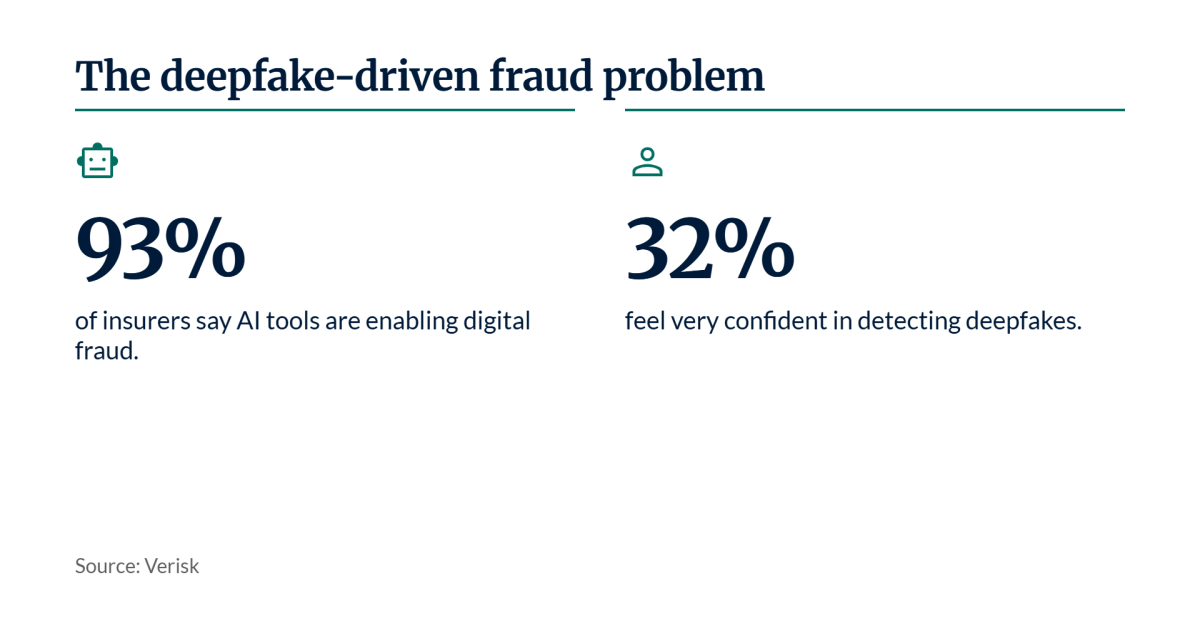
Why AI fraud tools could cause claim risks
Carpe VP of Product Tom Rasmussen explains why black-box fraud scores create operational and legal risk when claims teams need defensible evidence.

What to Consider When Evaluating Claims Intelligence Technology
A practical framework for claims leaders evaluating coverage, evidence quality, adoption, integration, implementation, and production economics.
See Carpe on Your Own Book
A short conversation and a tailored walkthrough of the Carpe solutions that match your line of business.
Talk to An Expert