

Why AI fraud tools could cause claim risks
Carpe VP of Product Tom Rasmussen explains why black-box fraud scores create operational and legal risk when claims teams need defensible evidence.
By Tom Rasmussen, VP of Product for Claims at Carpe. Originally published by Digital Insurance on August 4, 2026.
Fraudsters are becoming more sophisticated, taking advantage of AI to create or alter digital and image-based claims documentation.
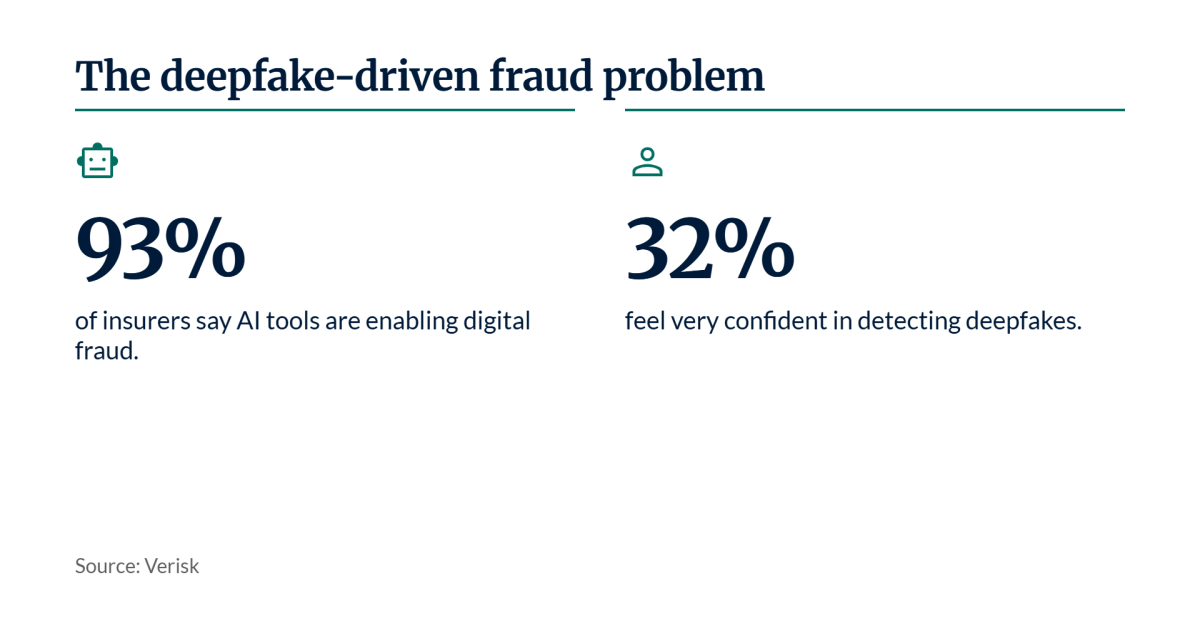
The Verisk State of Insurance Fraud Study found that 98% of insurers report AI editing tools are fueling digital fraud, yet only 32% feel very confident detecting these deepfakes. This shift presents a new challenge as the reliability of claim photos and documents forces insurers to rethink fraud detection in the age of AI. When AI can make false evidence look real, the question becomes how do insurers know what to trust?
Why manual fraud review falls short
AI has quickly moved beyond six-fingered hands and obvious, "Uncanny Valley" images. Even incredibly well-trained eyes can be fooled by AI-enhanced or AI-generated images. Traditional claims managers aren't necessarily trained in digital arts. How can they be expected to provide a critical review of the massive volume of digital documentation that is required throughout the claims process?
According to Aviva's latest insurance fraud data, the insurer detected about $311 million (£233 million) in suspected claims fraud in 2025. Aviva warned that fraudsters are increasingly using AI-generated images and manipulated documents to support false or exaggerated claims. This means claims teams are reviewing the facts of the claim while also evaluating whether the supporting evidence has been altered. Claims evidence is becoming more difficult to trust, adding another layer of complexity for teams. A single photo, document, or receipt can no longer be taken at face value in the AI era.
When AI creates more noise and risk
In an effort to mitigate this challenge, insurers are moving to integrate AI fraud scoring tools to help review and flag potentially fraudulent claims. However, while these tools are meant to alleviate workloads, they end up adding to them by flooding teams with alerts or black-box scores without any clear evidence of why a claim was flagged.
Black-box scores might seem beneficial on the surface to help overwhelmed claims teams review and rank cases faster. However, they subject insurers to increased operational and legal risk because they don't provide an evidence trail explaining what triggers concern. Operationally, these unclear alert outputs or vague fraud scores place the burden back on adjusters to determine whether they're accurate to make a decision on the claim. If a claimant pursues legal action on a claim decision, the insurer will need to provide clear reasoning and evidence for their decision. A fraud score alone is not defensible when AI is being used to fuel claims fraud. This requires insurers to have clear, explainable evidence to justify their decisions. If their only basis for denying a claim is a black-box score, then the insurer will be under major scrutiny and exposure, costing them crucial resources and reputational damage.
If insurers trust these scores at face value, they may miss other critical factors that provide the full story, either corroborating or contradicting the claim. In an environment where AI-generated documentation is being increasingly used, insurers need outputs that adjusters can understand and act upon with confidence, not more noise with baseless alerts.
From faster flags to defensible decisions
As fraud becomes easier to manufacture, insurers need AI-enabled fraud detection that does more than flag suspicious claims. It must connect more data points, surface clear evidence, and build a more complete picture of each claim. A single photo, invoice, or document can be faked, but it is much harder to fake the broader story around a claim. That is where AI becomes valuable, by helping carriers spot inconsistencies across images, records, timelines, claimant behavior, and other supporting evidence before questionable claims move further through the process.
AI does well at gathering data, summarizing information, identifying patterns, and routing claims to the right person. However, insurers need AI tools that provide clear, relevant facts that can withstand scrutiny, not just a single flag or score. This requires connecting findings to the evidence behind them so that adjusters have a defensible paper trail if the decision is challenged.
In the end, AI should support claims teams, not replace them. Humans still need to evaluate the full context of the claim, make judgment calls, and ensure decisions are fair and consistent. The true value of AI-enabled fraud detection tools lies in helping claims teams evaluate evidence with greater clarity, determine what can be trusted, and defend the next step.
Originally published at Digital Insurance.
Source
Originally published at Digital Insurance.
Related Resources

Carpe Data urges industry-wide collaboration to stem AI-driven insurance fraud
Carpe Data calls for coordinated industry response to counter increasingly sophisticated fraud tactics powered by artificial intelligence.

Artificial Intelligence at Allianz: Two Use Cases
Emerj examines how Allianz deployed agentic AI to automate low-complexity claims and machine learning to flag potential fraud, both with measurable operational gains.

New and emerging risk predictions for 2026
Industry experts outline evolving risks for insurers, from third-party cyber vulnerabilities to chatbot privacy claims and distracted driving trends.
See Carpe on Your Own Book
A short conversation and a tailored walkthrough of the Carpe solutions that match your line of business.
Talk to An Expert