

Carpe Litigation | Claims decision support
Build a stronger position. Know your next move.
Carpe Litigation helps litigation managers assess which files need intervention and equips adjusters to act. AI organizes litigation documents and connects findings to source material, giving teams a clearer basis for evaluating exposure and preparing a negotiation position.
See what needs attention before the next decision
A demand deadline, an unresolved record gap or a change in exposure can alter the next move. Bring those issues into view before the next evaluation or negotiation.
Deadline pressure
See which demand deadlines are approaching so managers can direct review before a response is due.
Incomplete evidence
Identify missing or conflicting information in the record and determine what needs to be reconciled.
Settlement readiness
Review readiness gaps and suggested next actions before refining the evaluation or preparing for negotiation.
Explore the workflow
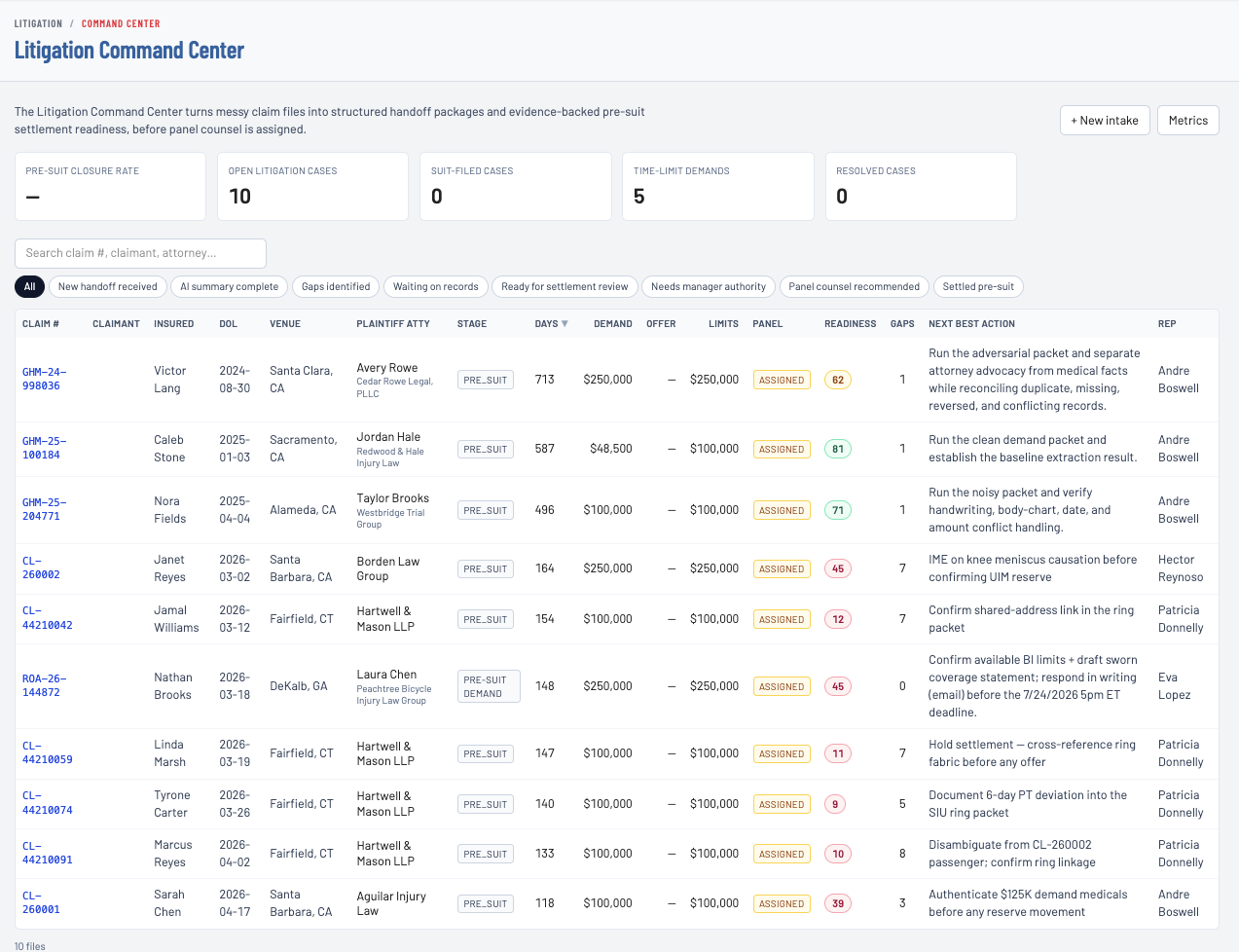
Prioritize files by urgency and readiness
Review approaching deadlines and potential readiness gaps alongside suggested next actions. Managers decide which files need attention; adjusters review the record and prepare their position.
Product views use separate example files to illustrate each workflow.
Prioritize files by urgency and readiness
Review approaching deadlines and potential readiness gaps alongside suggested next actions. This example shows pre-suit files; managers decide which files need attention.
Understand what is missing
Bring litigation documents and claim activity together to identify what needs to be reconciled before refining the evaluation.
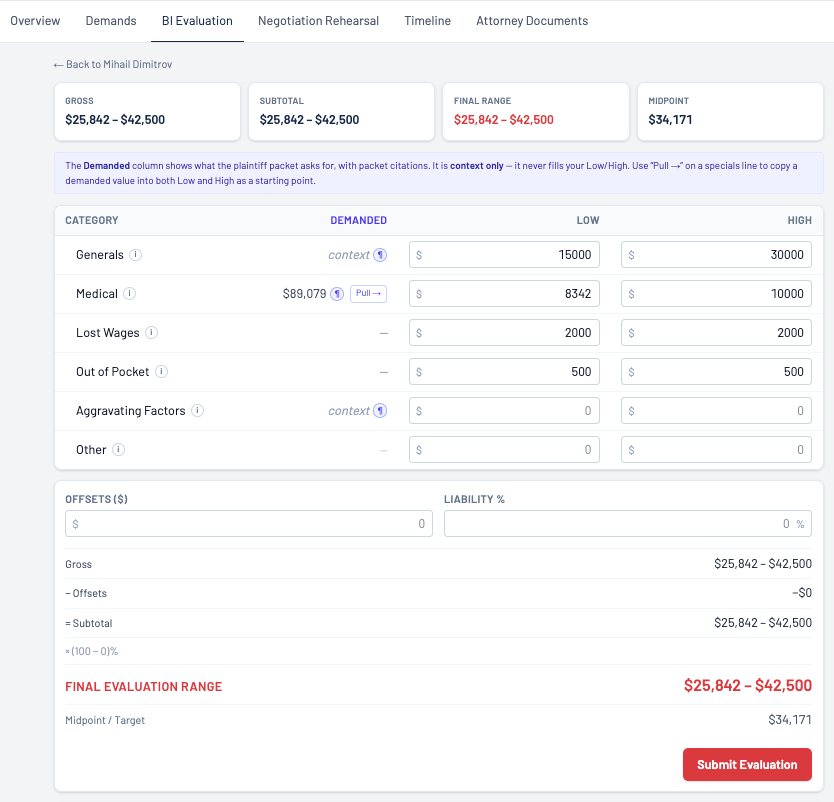
Review a proposed bodily injury evaluation
Review the proposed range and its components alongside citation markers. Your team checks supporting source material and decides whether to accept or revise the evaluation.
Prepare for the next conversation
Use an AI opposing-counsel persona to pressure-test your position before a live discussion. Practice responding to different negotiation approaches and identify arguments that need more support.
Review the sources behind the proposed evaluation
Review a proposed bodily injury evaluation range alongside its financial components and supporting sources. Assess injury allegations against treatment records and bills, then resolve information gaps before accepting or revising the evaluation.
Understand what drives the range
The example separates demanded amounts from the low and high evaluation inputs. Citation markers identify supporting packet material for review; the demand remains context for the proposed evaluation.
Your team makes the call.
Check findings against the cited sources, with carrier-supplied facts kept separate from proposed and accepted information. Your team retains authority over evaluation, settlement, negotiation and trial strategy, while your claim platform remains the system of record.
Common Questions About Carpe Litigation
What is Carpe Litigation?
Carpe Litigation is a claims decision-support workspace for litigation managers and adjusters. It brings portfolio oversight and claim review together with proposed bodily injury evaluations and negotiation preparation.
Who is Carpe Litigation built for?
It is built for carrier litigation managers and claim adjusters, along with internal specialists supporting coverage review and litigation strategy.
How does Carpe use AI in litigation work?
Carpe uses AI to organize documents and prepare summaries with source citations. It highlights potential gaps or inconsistencies and suggests next actions for review. Claim professionals assess the proposed information and make decisions.
Can it analyze demand packets and depositions?
Yes. Carpe organizes information and financial details from demand packets and prepares deposition reports with source citations for human review. Your team checks the source material before accepting proposed information or acting on it.
Does Carpe Litigation replace the core claim system?
No. Your claim platform remains the system of record. Carpe provides a workspace for claim review and negotiation preparation, keeping carrier-supplied facts distinct from proposed and accepted information.
Walk one claim from review to negotiation preparation
See how your team can prioritize a file for review and assess a proposed bodily injury evaluation against cited source material before preparing for negotiation.